




Key Takeaway
GM utilizes virtual reality (VR) to streamline vehicle development by reducing reliance on physical models. The VRAC team, consisting of engineers and specialists, conducts early virtual reviews to enhance precision and cut costs. VR headsets enable team members to inspect components, identify design flaws, and address production challenges before manufacturing begins, minimizing costly changes later. Additionally, GM employs VR to improve ergonomic safety for assembly line workers by simulating real-world environments to uncover potential issues with accessibility and comfort. This proactive approach helps prioritize worker safety and reduce the risk of repetitive strain injuries.
VR decreases GM’s dependence on physical models, facilitating early virtual reviews that result in quicker development, greater accuracy, and significant cost reductions.
The VRAC team, made up of engineers, manufacturing operators, and research specialists, utilizes VR to immerse themselves in vehicle designs before creating a physical model.
VR headsets enable team members to inspect components, ensuring functionality and uncovering potential design issues early on.
This strategy allows GM to identify and address production challenges in advance, minimizing costly changes during later manufacturing stages.
Enhancing ergonomics and safety through VR
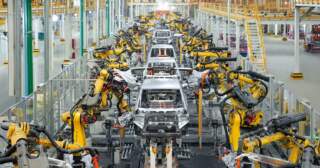
In addition to improving design and production, GM leverages VR to enhance ergonomic safety for assembly line workers.
While traditional simulations may confirm task feasibility, VR evaluates practicality and comfort.
By virtually simulating real-world assembly environments, GM can identify ergonomic issues that may not be apparent in digital simulations.
VR enables engineers to assess component accessibility, visibility limitations, and task-related physical strain. This ensures that workstations prioritize human comfort and safety, thereby reducing risks such as repetitive strain injuries.






Leave a Comment