



Key Takeaway
During his CES keynote, Jensen highlighted the imminent “ChatGPT moment” for general robotics, introducing Nvidia’s Cosmos platform. Cosmos integrates generative models and video processing to enhance physical AI systems, allowing advanced simulations for optimal decision-making. It works with Nvidia Omniverse to enable pre-deployment robot training. Companies like 1X, Agile Robots, and Uber have adopted this technology, which is available on GitHub. In autonomous vehicles, Cosmos generates extensive driving scenarios, significantly boosting training datasets. Jensen also announced Project Digits, a compact AI supercomputer set to launch in May, emphasizing the need for AI tools across various fields.
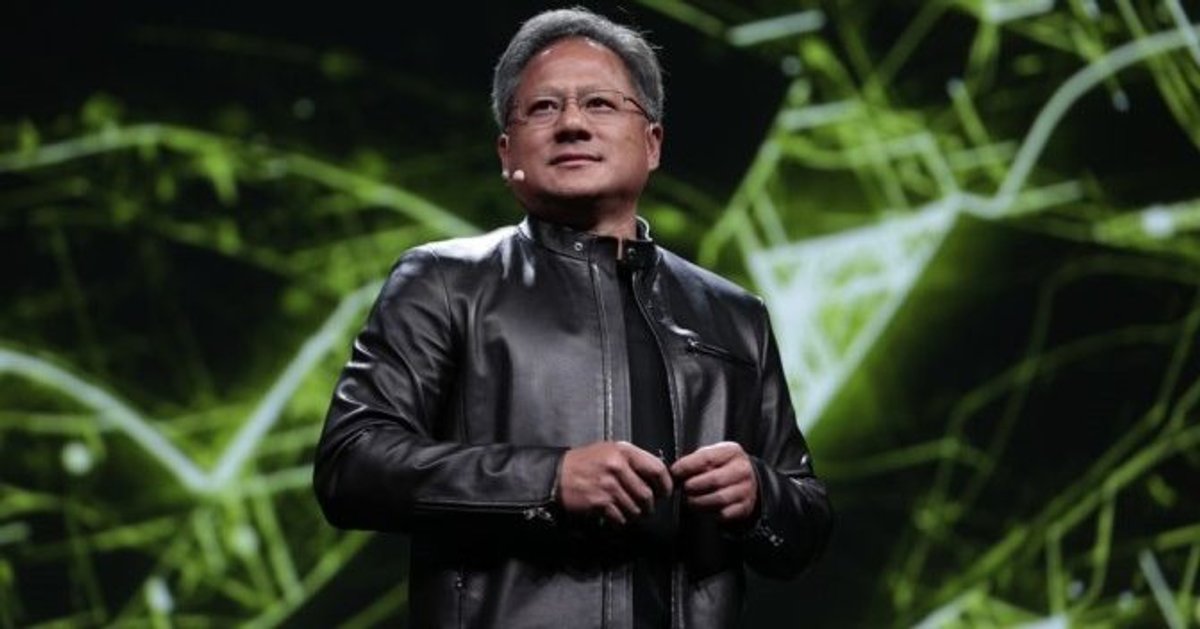
“The ChatGPT moment for general robotics is imminent,” Jensen stated during his CES keynote.
Cosmos combines generative models, tokenizers, and video processing pipelines to enhance physical AI systems.
This platform provides AI models with sophisticated simulation capabilities, allowing them to forecast and assess various future scenarios to determine the best actions.
When integrated with Nvidia Omniverse – a platform for developing virtual environments – Cosmos enables developers to simulate and train robots prior to their physical deployment.
Several companies have already embraced this technology, including:
- Robotics firms 1X
- Agile Robots
- Figure AI
- Neura Robotics
- Uber
Nvidia has made Cosmos accessible on GitHub under an open license.
In the autonomous vehicle sector, Cosmos aids in creating detailed driving scenarios that enhance training datasets.
According to Jensen, this method can scale “hundreds of drives into billions of effective miles,” generating the data volume essential for the safe development of autonomous driving.
Project Digits and AI Blueprints: Showcasing Nvidia’s commitment to AI accessibility
Making AI technology broadly available is a fundamental aspect of Nvidia’s strategy.
At CES 2025, Jensen also introduced Project Digits, a compact AI supercomputer powered by the GB10 Grace-Blackwell superchip, set to launch in May.
“Every software engineer, every engineer, every creative artist – anyone who uses computers as a tool today – will require an AI supercomputer,” he remarked while unveiling what he described as Nvidia’s smallest yet most powerful AI supercomputer.








Leave a Comment